Overo: The Most Multi-Faceted Pattern
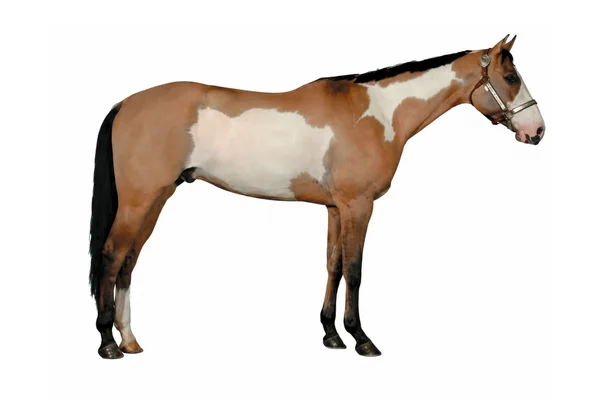
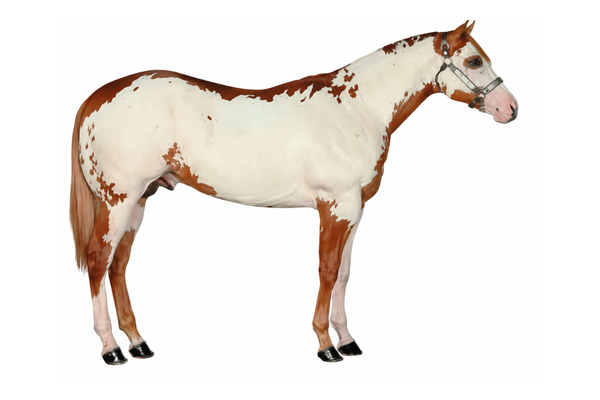
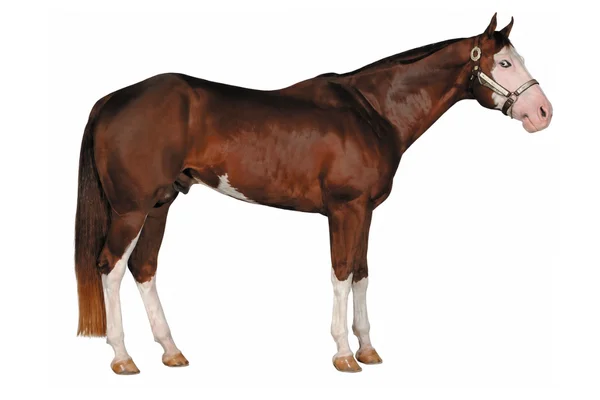
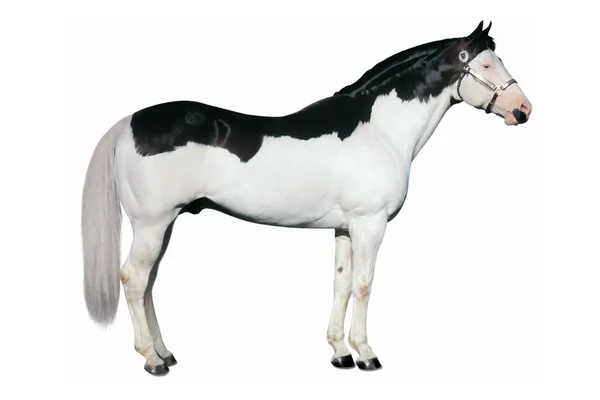
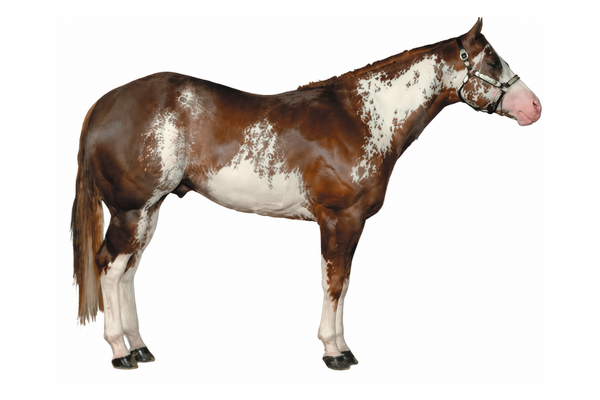
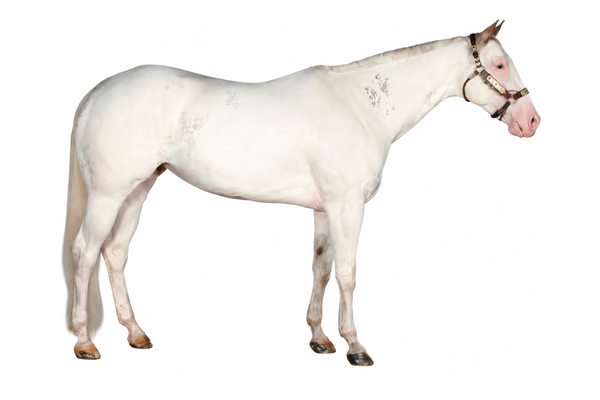
Overo is actually an umbrella term. It encompasses more than 30 different pinto genes—excluding Tobiano—including Frame Overo, Splashed White, and Sabino. Each of these genes works a little differently, which is why Overo horses can look so incredibly varied. Typically, the white markings don’t cross the topline between the withers and the dock of the tail, and at least one—often all four—legs remain dark.
An exception are Splashed White horses: they look as if they’ve been dipped in white paint, featuring strikingly high white stockings. The spots themselves on an Overo are often irregularly shaped and sometimes look almost scattered or splashed. You’ll frequently see prominent markings on the head, ranging from a classic blaze to a completely white face (bald face). The tail is usually a solid color, and blue eyes are especially common with this pattern. Whether an Overo ultimately appears mostly dark or mostly white depends heavily on its individual genetic mix. That’s exactly what makes the multi-faceted Overo pattern so exciting: no two horses are alike.
Tobiano: The Classic Pinto Pattern
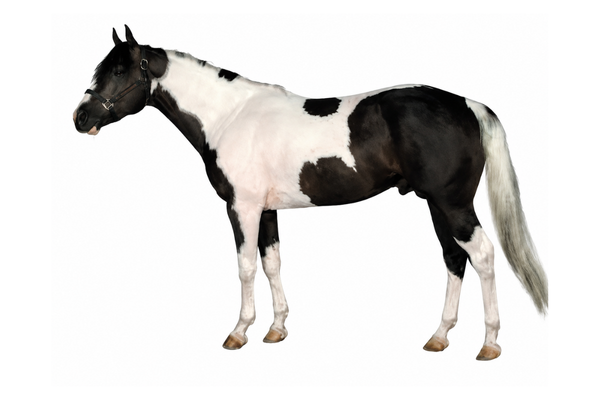
Tobiano is probably the best-known pinto pattern in the Paint Horse and is inherited dominantly. A foal needs at least one parent with a Tobiano or Tovero pattern to express it. How pronounced it turns out ranges from subtle, small markings to a truly “loud” pattern with a lot of white.
It is characteristic that the white areas cross the topline between the withers and tail, while the dark base color usually sits on one or both flanks. As a rule, all four legs are white at least from the hocks and knees down. The spots on a Tobiano often look regular and round to oval, almost as if they form a shield over the neck and chest. Some white areas show small dark pigment spots, colloquially known as “ink spots.” Classic facial markings such as a blaze, star, or snip are typical on the head, and the tail frequently features two colors. This shield-like spot pattern is usually how you recognize a Tobiano at first glance.
Tovero: When Two Patterns Combine
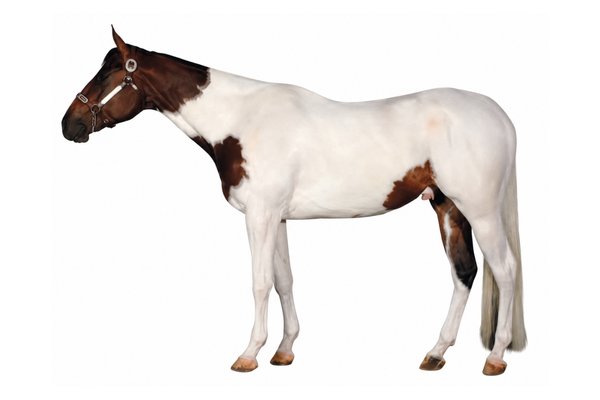
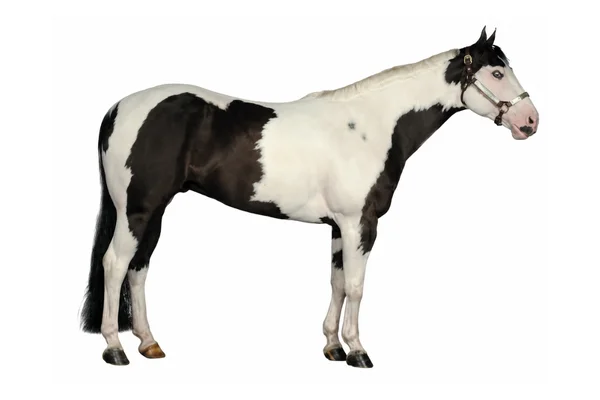
Tovero is essentially a combination: the horse carries both the Tobiano gene and at least one Overo gene, and it is precisely this mix that often results in particularly extensive white areas. Typical for a Tovero is dark pigmentation around the ears, which sometimes extends across the forehead or the eye area. One or both eyes can be blue. Additional white is also frequently seen on the face, while dark pigmentation is often retained around the muzzle, extending along the sides of the head. Also characteristic are dark spots on the chest, flank, or dock of the tail, which look like small islands of color within the white area. Because the Tovero combines the characteristics of both Tobiano and Overo, these horses feature some of the most striking color patterns in the breed, and the result is never completely predictable for breeders.
Solid Paint Bred: Color isn’t everything
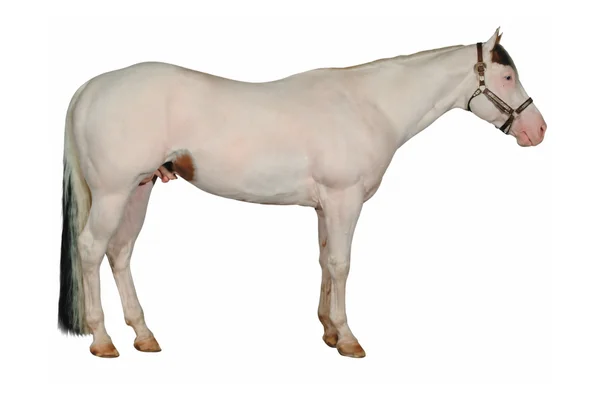
Not every Paint Horse reveals its heritage at first glance. While a Solid Paint Bred meets all APHA pedigree criteria, it carries no visible white pinto markings. However, that doesn’t necessarily mean the pinto genes are missing: many solid horses carry Paint pattern genes without showing them externally, and a DNA test can reliably reveal this. Such a horse can still qualify for the APHA Regular Registry—either through a combination of Paint-specific traits and proven pattern genes, or through pedigree if both parents are APHA-registered and at least three consecutive generations of APHA breeding can be verified. Solid Paint Breds show that Paint genetics can live on invisibly, even if the coat itself doesn’t tell the story.
From Chestnut to Dun: The Base Colors of the Paint
Along with the pinto pattern, the base coat color plays a huge role in the American Paint Horse, and the variety is immense. From classic coat colors like chestnut, black, or bay, to golden dilution shades like Palomino, Buckskin, Cremello, and Perlino, all the way to Champagne variants in Amber, Classic, and Gold, almost everything is represented. On top of that are dun shades like Dun, Red Dun, and Grulla, as well as roan colors such as Bay Roan, Blue Roan, and Red Roan, plus Gray and Smoky Cream. Each of these base colors can combine with Tobiano, Overo, or Tovero, resulting in a tremendous variety of color combinations. It’s precisely this interplay of color and pattern that makes every Paint Horse truly one of a kind. If you’re looking for your personal favorite coat color, this diversity comes alive in the ehorses marketplace for American Paint Horses—ranging from subtle Overo markings to extravagant Toveros.