Table of Contents
What is a pre-purchase examination (PPE) for horses?
The pre-purchase examination (PPE) is your most important veterinary check before buying a horse. Its aim is to assess the horse's current state of health objectively and give you, the buyer, a sound basis for your decision on the existing health risk. The vet documents the horse's current condition as a snapshot.
Be careful with the term "MOT" (in German stable slang: "TÜV"), which is often used around the yard. It sounds practical, but it means nothing legally and is often misleading. If a seller claims the horse has "passed its MOT," that says nothing about the actual scope of the examination, the examiner's qualifications or the quality of the X-rays.
So never rely on vague statements like this. Always insist on the written examination report, including all X-rays, and have a vet you trust explain these documents to you. This is the only way to make sure the examination was carried out to current standards (e.g. the German X-ray guideline, the "Röntgenleitfaden") and that you aren't looking at outdated or incomplete data that could hide health problems.
One important point for the validity of the PPE: the horse must not be under the influence of medication during the examination. Anti-inflammatories, painkillers or sedatives can mask lameness or resistance that a "clean" examination would reveal. A blood or urine sample provides clarity here and protects you from nasty surprises after the purchase.
Why is a pre-purchase examination worthwhile?
A PPE minimizes the financial risk for the buyer and the liability risk for the seller. It establishes whether the horse is physically suited to its intended use (e.g. higher-level sport or leisure riding). In addition, many insurers require proof of the horse's state of health before you can take out surgery or life insurance. In the past, PPEs were usually only carried out on high-priced sport horses, but they also make sense if you're looking for a leisure partner. A study from England shows how important they are: a research team led by Dr. David Bolt at the Royal Veterinary College in London analyzed 133 pre-purchase examination reports from three equine practices, excluding racehorses. Adverse findings were recorded in 57.1 percent of the horses examined. The most common finding was lameness, at 55.3 percent.
Your personal access to the equestrian world ✨
- Save your favorites
- Create search alerts
- Exclusive discounts & deals
More than 500,000 people trust ehorses
Basic or full PPE: what are the differences?
The scope of the examination depends mainly on the value of the horse and how you plan to use it.
- Basic PPE: The vet carries out a clinical examination. They check the heart, lungs, eyes, teeth and the musculoskeletal system, both standing and in motion (on the lunge or under saddle).
- Full PPE: In addition to the clinical examination, it includes an extensive X-ray examination. The vet takes specific X-rays of the limbs (usually the legs and back) to identify hidden changes to the bones.
- Extended PPE: Goes beyond the standard and adds special procedures such as ultrasound, endoscopy or laboratory tests (blood and doping tests).
Important: A clinical examination without X-rays (basic PPE) can be very risky for expensive sport horses, because it says nothing about the health of the bones. Whether you choose a basic or a full PPE, always order a blood sample as well. It can be tested for painkillers and other medication and is often stored for six months. Other possible additional examinations include a semen sample for stallions, ultrasound, endoscopy or a test for roaring (laryngeal hemiplegia).
What is the difference between a pre-purchase and a pre-sale examination?
The key difference between the two examinations is your role as the client and the goal that comes with it: as a buyer, you commission the pre-purchase examination (PPE) to assess the health risk objectively before signing the contract. The pre-sale examination, on the other hand, is a proactive tool the seller uses to document the horse's health status.
- Pre-purchase examination: You hire a vet you trust to gain certainty for your buying decision. You actively decide the scope of the examination (e.g. clinical check, X-rays, lab tests) and may make the purchase depend on the result.
- Pre-sale examination: As a seller, you often have this examination carried out independently of a specific buyer. Your aim is to create transparency, market your horse professionally with an objective health certificate and protect yourself legally by documenting the horse's condition at the time of the examination.
In short: the pre-purchase examination is your safety net as a buyer; the pre-sale examination is your transparency tool as a seller. If you have the horse examined by your own vet, agree with the seller that they will release their regular vet from confidentiality. That way, your vet can get the information they need about the horse's history from their colleague.
How does a PPE differ from a clinically indicated examination?
A PPE differs from a clinically indicated examination mainly in its goal: with a pre-purchase examination (PPE), you check a (presumably) healthy horse for risks, whereas a clinically indicated examination looks specifically for the cause of an already known problem.
The PPE is a "blind screening." Since the horse has no known medical history or obvious symptoms, the vet isn't looking for a specific diagnosis but creates a comprehensive health profile. They assess objectively whether the horse is fit for your purposes.
A clinically indicated examination, by contrast, starts with a specific reason, such as lameness or nasal discharge. The vet has a well-founded suspicion and uses targeted diagnostic steps to pinpoint the cause of the illness.
However, if the vet unexpectedly discovers abnormalities during your PPE, the procedure changes: in consultation with you, the examination then moves directly into clinical diagnostics to investigate this specific problem in detail.
How extensive does a pre-purchase examination need to be?
A thorough pre-purchase examination (PPE) balances effort and benefit to give you a reliable picture of the horse's state of health. Your goal is not only to spot obvious problems but also to find latent pathological changes that could cost you dearly later, for example through lameness or reduced performance.
For the examination to be legally sound and meaningful, it must follow a standardized examination protocol. Today, this approach reflects the recognized standard of veterinary care. It protects you from nasty surprises and at the same time gives the vet the security they need when documenting the findings.
Beware of "homemade" certificates: Be skeptical if a seller only shows you a short, informal note as the examination result. Even if such "three-quarter-page certificates" seem straightforward at first glance, they often don't meet today's quality standards. In a dispute, their value is extremely limited. So always insist on an examination that strictly follows the common, standardized protocols. This is the only way to make sure no important aspects were overlooked.
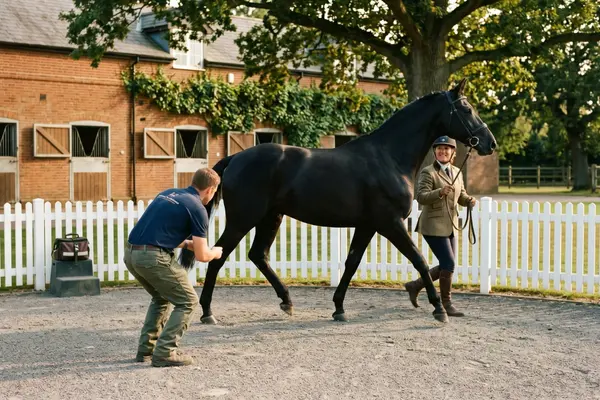
Pre-purchase examination protocol and “contract for the examination of a horse”
In Germany, the protocol (Appendix 1: veterinary pre-purchase examination protocol) was last revised and updated in 2008 by the horse committee of the German Federal Veterinary Association (Bundestierärztekammer) and the German Society for Equine Medicine (GPM). The set of forms consists of the following parts:
- Seller's declaration,
- A. General terms and conditions of contract,
- B. Examination protocol,
- C. Summary,
- Notes for vets,
- Owner's declaration (in triplicate),
- Blue set of forms for the preliminary record taken at the horse, and
- General terms and conditions with the examination order as the original contract.
The client or their representative should sign the preliminary record (blue set of forms) immediately. The final report can be written up later as a fair copy (on white paper) and must also be signed by the client or their representative and by the vet. The set of forms also includes a sheet (protocol) for endoscopic examination. This becomes part of the contract form if endoscopy is agreed as an additional examination.
The "seller's declaration," with details about the seller and the horse's identity and history, should be signed before the examination contract is concluded.
The client should also be shown part "A. General terms and conditions of contract" before the contract is concluded. Among other things, the specific scope of examination requested within the standard, or any restrictions or extensions to the examination order, should be recorded in writing there and signed by the vet and the client.
Under section 9, the client is informed in detail that the findings can only be accurate if the horse is not under the influence of medication (at the time of the examination). Under section 8, a medication test can already be ordered by ticking a box. Section 10 covers the X-ray examination, its scope and validity, and the vet's copyright protection, and closes with the recommendation to remove the horseshoes before X-raying the forelimbs.
Part B of the set of forms contains, in sections I to IV, the examination procedure in the recognized standard scope, which clients are advised to follow. No examination should be left out. Clients should have the purpose of the examinations explained to them, especially the optional ones (e.g. endoscopy, additional X-rays, medication testing). Costs should also be discussed so that clients are properly involved in deciding the scope of the examination.
The individual steps of the pre-purchase examination are as follows: after the client, the vet and any "third party," as well as background information (including on the trial ride, the equine passport, the horse's food-chain status and its identity), have been entered in the header of the protocol, a general examination is carried out and recorded. It covers:
- Condition of care,
- Nutritional condition,
- Skin and coat,
- Noticeable scars,
- Skin tumors,
- Core body temperature,
- Pulse and breathing.
The vet also looks at the
- Head region and the
- Mucous membranes of the eyes.
Next, the vet checks the
- Lymph nodes under the jaw and the
- Neck veins (jugular veins), and looks out for
- Coughing and nasal discharge.
The vet then examines the
- Nervous system, including the central and peripheral nervous system,
- Eyes and
- Behavior.
This is followed by examinations of the
- Respiratory system,
- Heart,
- Oral cavity,
- External genitals,
- And an assessment of the consistency of the droppings.
The vet then records whether a sample should be taken to test for medication and how it will be handled (immediate or later testing).
Next comes the examination of the musculoskeletal system. This includes looking at and feeling all the important structures of the limbs, neck, back, croup, and chest and belly area while the horse is standing. The horse is then assessed at walk and trot in hand in a straight line on hard ground. Provocation tests are also carried out, namely:
- Testing for pain when turning by moving the horse on a circle in hand,
- Flexion tests,
- And testing for flexion pain and restricted flexion.
Additional examinations can also be carried out and recorded here on request, e.g.:
- Hoof tester examination,
- Examination under the rider, trotting on a hard circle, after work on the lunge, etc.
During and after exercise on the lunge, under the rider or with the horse moving freely, the vet looks for movement disorders, abnormal breathing noises and breathing difficulties. The heart and lungs are also listened to, and the so-called recovery values are recorded. Finally, further and/or additional examinations follow.
This includes the X-ray examination. Its scope is set in advance, and additional images, for example of the spinous processes or the cervical spine, can be agreed.
Finally, you can choose whether an endoscopy ("scoping") of the airways, a rectal or vaginal examination and/or laboratory tests should be carried out.
Part C summarizes the findings. Vets are strongly advised to be cautious about predicting how individual findings may develop. Performance prognoses are not possible. Both contracting parties should sign the last page of the protocol again, even if the examination was stopped. In that case, the protocol should record why and at whose request this happened.
The original protocol, which has an individual control number, is given to the client, along with a copy if required. The vet keeps a copy of the examination protocol.
Taking costs, benefits and risks to the examined horses into account, the pre-purchase examination provides useful answers to clients' typical questions. At the same time, an examination carried out in accordance with the model contracts (Appendix 2), including their terms and conditions, gives vets reasonable limits on their liability and thus contributes to a fair balance of interests between all parties.
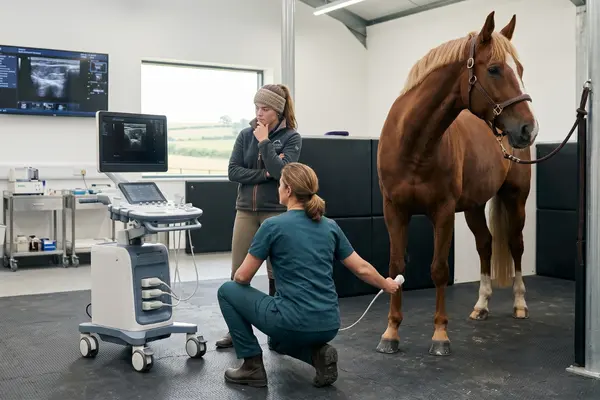
Significance of X-rays in pre-purchase examinations
Scope of the X-ray examination
Almost since X-ray technology was invented, X-rays of the musculoskeletal system have been part of the vet's toolkit for the orthopedic examination of lame horses. Normal anatomical findings as well as pathological findings are documented today in X-ray atlases, textbooks and handbooks, and in countless specialist publications. It was an obvious step to use X-rays as an additional examination in pre-purchase examinations as well.
From the outset, the aim was to detect any pathological findings on X-rays that cannot (yet) be identified by a clinical orthopedic examination alone (looking, feeling, provocation tests and trotting up), but that could cause lameness once the horse is put under future strain. After all, every rider knows that the health of the bones and joints in the limbs is crucial to a sport horse's performance.
That's why it is in the interest of most sport horse buyers to get as much information as possible about the health of the limbs to protect themselves against a bad purchase. For horses intended or at least considered for breeding, it is also about detecting bone and joint changes that are not clinically visible but may be present and heritable, and that would rule the horse out for breeding.
For these reasons, X-rays have been part of many pre-purchase examinations for more than 40 years. As explained above, they are considered additional examinations and, for practical and economic reasons, are only carried out once the clinical examination has shown no pathological findings, or at least acceptable findings.
Today, 18 X-rays are standard for a full PPE, including images of the hooves and fetlocks, the hocks and the stifles. These standard images mainly reveal bone spavin, changes in the navicular region, cystic lesions and so-called chips (OCD). If the horse is sensitive in the back, the spinous processes can also be X-rayed, for example to detect a tendency toward kissing spines. A check of the cervical spine for possible facet joint arthritis is also a good idea.
These X-rays correspond to the ones that would be taken first in clinical diagnostics for lameness or rideability problems, but then typically only of the lame limb or the sensitive area of the back. Just as in a clinically indicated examination, additional X-rays (special, supplementary and follow-up images) can also be taken during a pre-purchase examination. Within the extended standard, for example,
- So-called skyline views of the navicular bones,
- Oblique images of the coffin and fetlock joints
can also be taken if specific questions or individual requests make this necessary. Foreign buyers in particular often request a large number of X-rays.
X-ray guideline: findings instead of X-ray classes
In the past, horses were assigned to an X-ray class after a full PPE, from class I (ideal condition, no particular findings) to class IV (risk condition, findings that deviate significantly from the norm), plus intermediate classes. These X-ray classes were controversial because vets interpreted findings differently. As a result, a supposedly ideal horse could suddenly become a risk case. The classes were therefore abolished in 2018, and the X-ray guideline of the German Society for Equine Medicine (GPM) has applied since then.
Instead of classes, there are now findings. X-rays showing normal anatomy or anatomical variations without functional significance are recorded as "o.b.B." (ohne besonderen Befund), meaning no particular findings. All findings that deviate from this are listed individually, including risk findings.
What is the value of X-rays in pre-purchase examinations?
The clinical findings on the musculoskeletal system recorded during a pre-purchase examination (lameness, sensitivity to pressure, results of flexion tests) can be influenced by many factors. These include, for example:
- Fitness level,
- Shoeing,
- Rest or reduced work before the pre-purchase examination,
- Painkillers given beforehand,
- Excitement of the horse being examined,
- Dominant behavior in stallions.
The findings depend solely on the assessment by the examining vet. Apart from the defined flexion time (60 seconds), for example, there is no practical way to standardize and check how flexion tests are carried out. The client of the pre-purchase examination, or a buyer who is handed a protocol, can therefore only trust the examiner's expertise. X-rays, however, are permanent documents that other vets can also assess. This makes it possible to have at least part of the examination results checked.
Experience shows that X-rays taken during a pre-purchase examination sometimes show changes that could also have been detected by looking at and feeling the limbs (e.g. joint swelling, malpositions, peculiarities of the hooves) but that are not mentioned in the examination protocol. X-rays can therefore also serve to document overlooked clinical findings, which can be particularly important in a dispute.
If, as part of a pre-purchase examination order, the recommended standard X-rays and any images of the extended X-ray examination are taken in the scope and quality recommended in the current X-ray guideline, and the findings are made and recorded as the guideline provides, clients receive solid examination results. Alongside the clinical results, these can serve as important criteria for the buying decision.
Free downloads for you (and your horse) ✨
- Sample purchase contracts
- Checklists & guides
- Training plan, vaccination schedule & more
100% free downloads
Is the vet liable for mistakes in the pre-purchase examination?
Under German law, if your vet makes a mistake during a pre-purchase examination, for example by negligently overlooking or misinterpreting findings, they are liable for it. Legally, you conclude a contract for work and services (Werkvertrag, Section 631 of the German Civil Code, BGB) with the vet. If they deliver a faulty report, they are liable to you for damages.
What does this mean for you if something goes wrong?
If something goes wrong because the examination was faulty, you may be able to claim from the vet the purchase price and all other investments you have made in the horse. In return, you must transfer ownership of the horse to the vet. The condition for this compensation is that you can prove the following: if the vet had recorded the finding correctly, you would not have bought the horse.
What do you need to consider when calculating damages?
When the transaction is reversed, your claim is reduced: the benefit you have had from the horse up to that point is deducted from the amount of compensation. This means the "benefit of use" the horse has given you in the meantime is subtracted.
What is the advantage of commissioning the PPE yourself?
If you commission the pre-purchase examination (PPE) yourself, you are in a much better legal position. With a direct contract for work and services with the vet, you have your own claim for damages if the vet has overlooked or misinterpreted findings.
Who is liable if there is a mistake?
If it turns out that the horse has a defect that the vet should have detected during the examination, you are free to choose: you can either hold the seller responsible under liability for defects or sue the vet directly. You are under no obligation to pursue the seller first.
What happens in the background?
The seller and the vet are often liable to you as so-called joint and several debtors. This means: if you successfully claim damages from the vet, the vet can take recourse against the seller. How exactly the costs are split internally between seller and vet is a complex legal question. What matters most for you as a buyer in this situation is that commissioning the vet yourself keeps you fully flexible and lets you enforce your claims securely.
Examination commissioned by the seller
The seller's claims
If the seller commissioned the vet, the seller has a direct contractual claim against the vet.
The question is whether, and if so to what extent, the seller has suffered damage as a result of the faulty veterinary report. After all, if the vet had examined the horse properly and uncovered a defect, the seller would either have decided not to sell the horse at all or would have had to lower the purchase price in line with the defect found. For this reason, the vet is only liable for the seller's wasted expenses and, where applicable, legal and/or court costs.
The buyer's claims
Under certain conditions, the buyer can also be included in the contract between the vet and the seller, even without being the vet's contractual partner. The buyer then also has a contractual (liability) claim (a contract with protective effect for third parties). However, note that the buyer has their own warranty claims against the seller. The buyer must pursue these first. Only if this fails can the buyer hold the vet liable.
Contractual limitations of the vet's liability towards the client
The vet may not limit their liability for faulty pre-purchase examinations in their general terms and conditions. Because veterinary care is a so-called cardinal obligation, the vet is liable even in cases of slight negligence.
Regarding the amount of liability for pre-purchase examinations, many vets only have liability insurance (financial loss liability) of up to €50,000 or €100,000. Many vets therefore limit their liability in the contract with the client to the sum covered by this insurance. If the vet negotiates this limitation individually, it is possible with almost no restrictions.
However, if the vet uses general terms and conditions, which is usually the case, they must bear the following in mind: according to the case law of the German Federal Court of Justice (BGH), the contractually reduced amount of liability must always be reasonably proportionate to the potential damage. For example: if the vet examines a horse with a purchase price of €150,000 and wants to limit their liability to the €50,000 sum insured, this is no longer reasonably proportionate.
As a result, the limitation of liability is invalid (Section 307 BGB) and the vet is liable in full. In the event of a claim, the insurer will then contribute €50,000; the vet must pay the remaining more than €100,000 out of their own pocket. For pre-purchase examinations of high-priced horses, the vet's only options are therefore to increase their financial loss insurance cover or to make an individual agreement with the client on the amount of liability.
If the vet wants to limit their liability, for example, to cases of gross negligence and intent (that is, not be liable for mistakes made through slight negligence) or to reduce the amount of their liability significantly, as in the example above, they can only do so legally through an individual agreement with the client. However, the client should then critically question whether the vet they have chosen really is the examiner they trust.
Frequently Asked Questions
How much does a pre-purchase exam for a horse cost?
The cost of a pre-purchase examination depends heavily on the scope you choose (basic or full PPE including X-rays) and on the value of the horse. In practice, it therefore usually ranges from around €300 to well over €1,000.
How long does a full pre-purchase exam take?
For a full pre-purchase examination including all X-rays, you should usually allow about two to four hours.
Who pays for the pre-purchase exam when buying a horse?
Since you as the buyer commission the pre-purchase examination for your own protection, you usually also pay the costs. However, buyers and sellers often make individual arrangements. One option: the buyer pays if the examination shows no findings. If there are findings, the seller pays.
How much does a full pre-purchase exam cost?
The cost of a full pre-purchase examination including X-rays usually ranges from €600 to €1,500, depending on the scope of the examination and the vet's fee rate.